2×4 OUTDOOR CHAIR
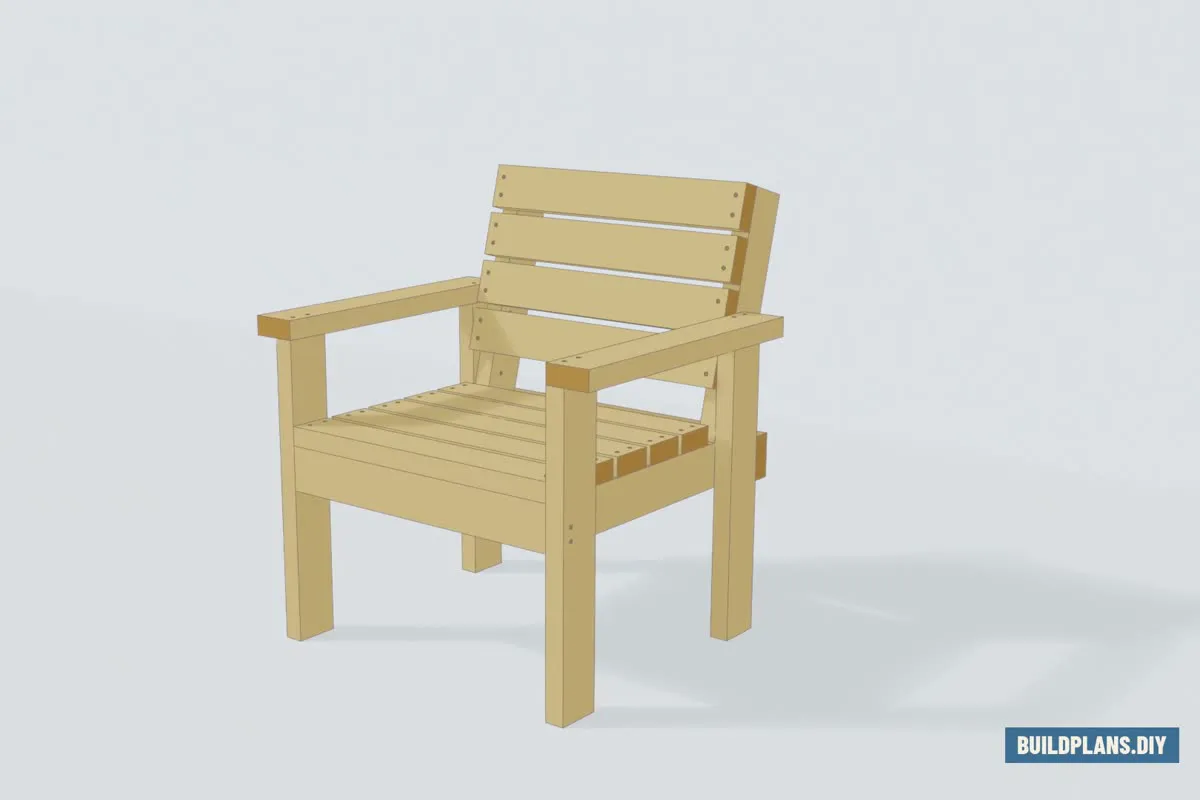
A reclined patio chair with arms. Widen the seat and the same parts come out with longer boards.
Pick a seat width: one chair, or a two-seat loveseat, from the same 2×4s
CAN I BUILD THIS?
6 steps, every angled cut at 15°. One day.
SHOP
9 MATERIALS TO GET · 7 TOOLS TO GET
Drawn end-on. ClickTap anything you already have.
Lowe’s materials are $1.91 less for this build.
CUT LIST
6 BOARDS · 5 SIZES TO CUT
LABEL EACH PIECE
ClickTap a piece when it’s cut, clicktap again to undo.
CEDAR 2×4×8′ BOARDS
0 OF 21 CUT- A: Rear apron
- B: Front apron
- C: Seat slat
- D: Back rail · 15° foot, top square
- E: Leg
- F: Back slat
- G: Arm
- H: Seat rail
BUILD STEPS
6 STEPS
- OPTIONAL GLUE
- Like this:The second H is the first one’s MIRROR. Lay it beside the first, legs matching.
ABOUT THIS PLAN
The chair resizes from 20″ to 48″ seat width, and it has two adjustments: the seat width and the seat height. Slide the width to 24″ and every slat and both aprons are cut to that number; set the height and the four legs follow it. The rails, the arms and the back never change. A 17″ seat and 25″ arms at every width, a two-seat loveseat at 44″ and up, and once the seat is wide enough to need it, a center rail goes in under the slats on its own.
Every board is a 2×4 and every joint is a face-to-face lap or a straight screw through it. The chair reclines back slightly: each back rail’s foot is cut at 15° so it stands flat on the seat rail. Those are the only angled cuts on the chair, one setting on a speed square; the rail’s top end is a plain square cut. Sit down and lean into it: the rear feet stand under the back of the seat. Widen the seat to 34″ or more and a center seat rail hangs between the aprons. The cut list follows.
COMMON QUESTIONS
Is the loveseat a different build?
No. It is the same chair with longer boards. The legs, the seat rails, the back rails and the arms are cut to the same lengths at every width; only the five seat slats, the four back slats and the two aprons follow the seat width.
What is the center seat rail, and when does it show up?
A third seat rail, hung between the front and rear aprons under the middle of the slats. A flat 2×4 slat is stiff across a chair but starts to give across a loveseat, so once the clear span between the side rails passes 30″ (a seat of 34″ or wider), the plan adds one and screws it to the aprons through their faces. It is on the cut list and in the screw count the moment the slider reaches 34″; below that there is nothing to add.
Which cuts are angled?
Two. Each back rail gets its foot cut at 15°, so it stands flat on the seat rail while leaning back 15°; its top end is a plain square cut. Set a speed square to its 15° mark once and use it for both; a circular saw makes them fine, and a miter saw makes them easier.
Why cedar? Can I build it from pressure-treated?
The list prices cedar. It is light, resists rot without treatment and is smooth to the touch, and it grays to silver outdoors unless you oil it. If you would rather build it from pressure-treated 2×4s, buy the same count and let them dry a few weeks before any finish goes on. Either way, buy smooth (S4S) boards that measure 1½″ × 3½″.
Will it tip when I lean back?
The rear feet stand under the back of the seat, and the legs stand straight up while the back leans 15°.
Does a patio cushion fit?
Yes. The seat runs 19 1/2″ front to back and 24″ side to side at your width, so a 24″ × 24″ patio cushion drops onto the default chair and a pair of them onto a 48″ loveseat. Add the cushion’s thickness to the seat height if you are matching a table.
Why is a 2×4 not actually 2 inches by 4 inches?
The name is the size before the mill dries and planes it. Every board sold as a 2×4 really measures 1 1/2″ × 3 1/2″, and this whole chair is drawn from that number: the seat slats sit ½″ apart because five of them at 3½″ make a 19 1/2″ seat, and the leg is 1½″ wide across the front because that is a 2×4 on edge. Cut to the lengths as written and everything lands.